What Is Intermediate Pilates? Is It Right For Me?
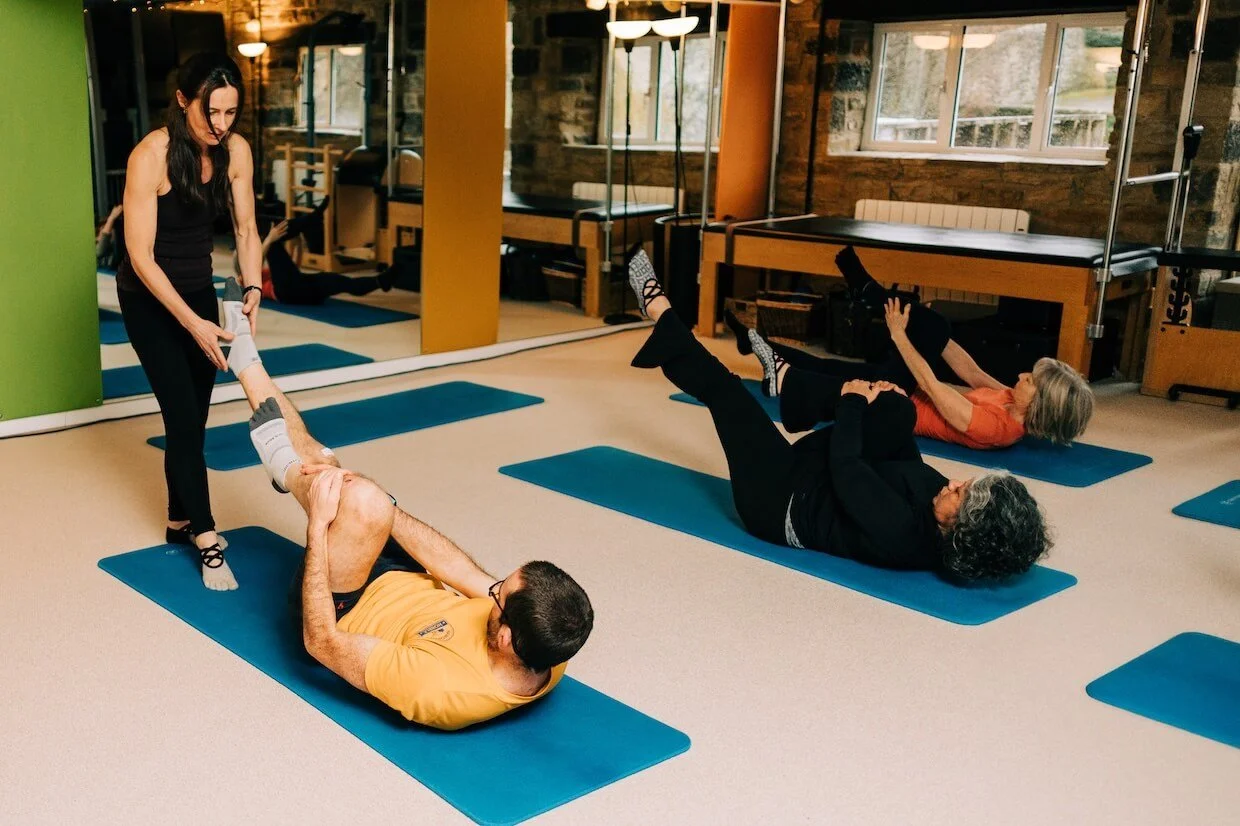
Intermediate Pilates deepens your practice with more complex movements, longer sequences, and greater challenges to your strength, flexibility, and control.
It's where the foundations you've built begin to truly transform your body and movement. Intermediate work asks more of you—more precision, more focus, more integration—and rewards you with strength and capability you might not have thought possible.
Challenge Matched to Your Capability with Rachel Luxon Pilates
While this article explores intermediate-level Pilates, Rachel's classes include modifications and progressions so you receive the right challenge for your current capabilities—whether building toward intermediate work or already there.
Book a one-to-one assessment. Rachel will evaluate your technique and recommend classes that genuinely challenge you while keeping you safe, progressing you as you develop.
If you've been practicing Pilates regularly and feel comfortable with the fundamentals, you might be wondering what comes next. Perhaps you're noticing that your Beginners or Improvers class feels more manageable now, or you're curious about taking your practice deeper. Intermediate Pilates represents an exciting progression—a chance to explore what your body can really do when you combine proper technique with consistent practice.
But intermediate doesn't just mean "harder." It means more refined, more integrated, and more transformative. Let's explore what intermediate Pilates really involves and how to know when you're ready to make the leap.
What is Intermediate Pilates?
Intermediate Pilates builds on the foundations you've established in beginner and improver classes, introducing more complex exercises, longer sequences, and greater physical demands. Where beginners focus on learning the eight principles and basic positions, intermediate work assumes you've internalised these foundations and can now apply them to more challenging movements.
At this level, exercises flow together with minimal rest between them. You'll hold positions longer, move through greater ranges of motion, and coordinate multiple elements simultaneously—breath, alignment, control, and flowing movement all working together. The classical Pilates repertoire opens up, introducing exercises that challenge your balance, flexibility, and core strength in new ways.
This isn't about pushing yourself to exhaustion or performing circus tricks. Intermediate Pilates is about deepening your understanding of how your body moves, building genuine functional strength, and discovering capabilities you didn't know you had. It's also where the mental benefits of Pilates really shine—the concentration required creates a moving meditation that leaves you both energised and calm.
Are You Ready for Intermediate?
One of the most common questions I hear is “ how do I know if this is the right class for me?” It's a brilliant question because progressing too quickly can lead to frustration and poor movement patterns, while staying at beginners or improvers level too long might mean you're not challenging yourself enough.
Here are the signs you're ready to explore intermediate work:
You've practiced consistently at beginner or improver level for at least six months, attending weekly classes. Consistency matters more than calendar time—someone attending three times a week for three months might be ready sooner than someone attending monthly for a year.
The fundamental exercises feel comfortable and you can maintain proper form throughout. You understand neutral spine, can engage your centering without holding your breath, and know the difference between working hard and straining.
Your instructor has suggested this would be a suitable class for you. We see your progress and can gauge if you’re being appropriately challenged. Don't be shy about asking for guidance—we want you to progress when you're ready and we will discuss your progression together.
You're curious about deeper challenges and feel mentally prepared for greater complexity. Intermediate work requires sustained concentration and willingness to embrace difficulty. If you find yourself eager to try more advanced variations or wanting to understand exercises more deeply, you might be ready.
However, remember that fitness in other activities doesn't automatically mean you're ready for intermediate Pilates. A marathon runner or weightlifter might have excellent cardiovascular fitness or strength, but still need time to develop the specific movement patterns, body awareness, and control that Pilates requires. The good news? With excellent general fitness and body awareness, you might progress through the earlier levels quite quickly—perhaps in two to three months of consistent practice.
Wondering if you're ready to progress?
Book your initial assessment to join an Intermediate level class and discover what happens when you challenge yourself. Your body is capable of more than you imagine.
Alternatively, explore our class schedule to see all the classes we offer, or get in touch to discuss your readiness for intermediate work. We're always happy to guide you to the right class for your current practice.
What Changes in an Intermediate Class?
The structure of an intermediate class will feel familiar—we still warm up, work through a progression of exercises, and cool down—but the content and pace shift noticeably.
Longer sequences with minimal breaks: Where beginners might rest between each exercise, intermediate students flow from one movement to the next. This builds stamina and teaches your body to maintain proper alignment even when fatigued. The sequences are choreographed to work complementary muscle groups and movement patterns, creating a comprehensive workout that challenges your whole body.
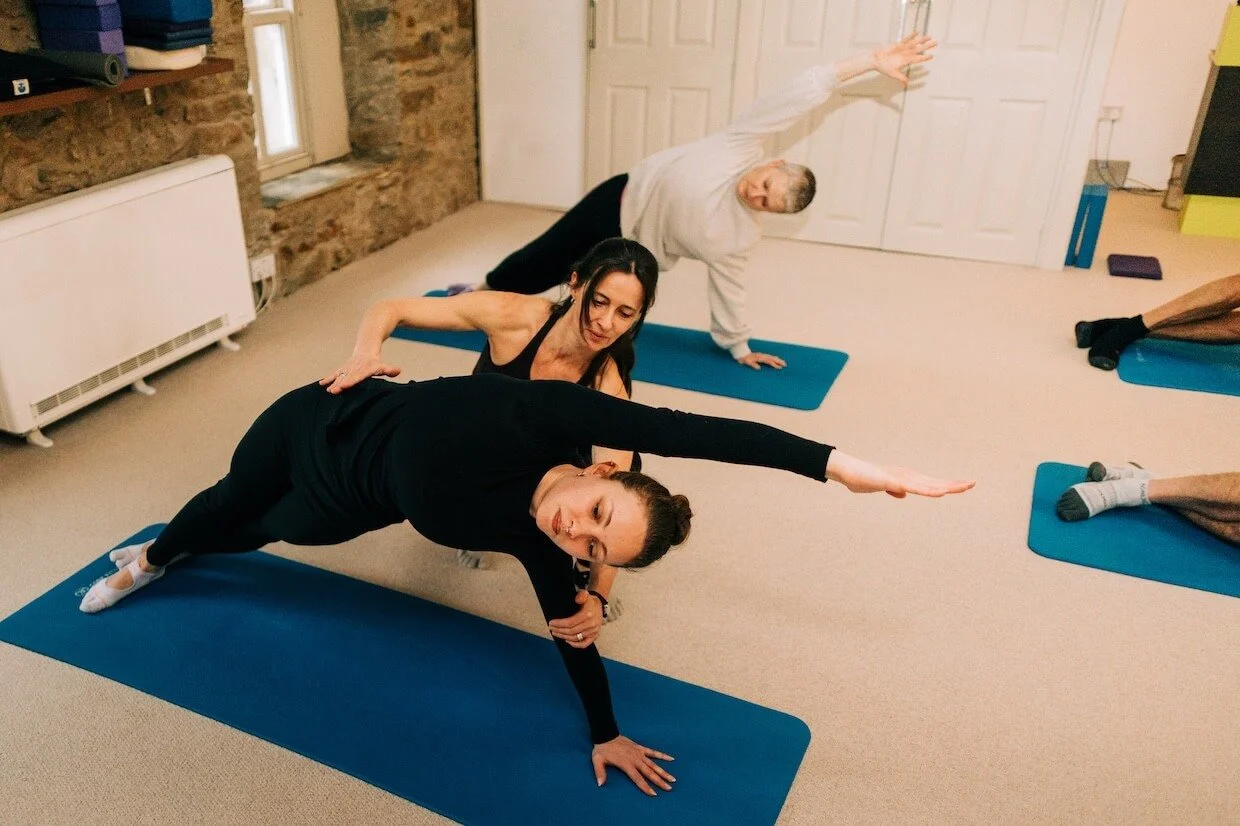
More challenging variations: The exercises you know from beginners and improvers return, but with added complexity. You might perform them with longer holds, greater ranges of motion, or additional elements. The Hundred becomes more challenging as you lower your legs. Roll-ups require greater control and we might add rotational elements or weights.. The amount of back line work will progress adding lateral flexions and rotations. Each variation is designed to progress your strength and flexibility safely and options will always be available for anyone that the exercise is not suited to.
Greater range of motion requirements: Intermediate work asks your spine to articulate more fully, your limbs to reach further, and your core to stabilise through larger movements. This increased range challenges your flexibility while building strength through full motion—the kind of functional fitness that translates to daily life.
Increased coordination demands: You'll coordinate complex breathing patterns with precise movements, sometimes working opposite limbs simultaneously or adding rotation to familiar exercises. This neural challenge keeps your brain engaged and builds the kind of body awareness that prevents injury and enhances all movement.
Props introduced: Small props like resistance bands, Pilates circles, and foam rollers add variety and new challenges to your practice. These tools provide feedback, assistance, or additional resistance, helping you work muscles in different ways. If you're interested in exploring equipment work further, our Reformer Pilates (and semi private studio session) offer another dimension of challenge using specialised apparatus.
The pace feels purposeful rather than rushed. There's still time to focus on quality, but you'll cover more ground in each session. The class has a rhythm that experienced practitioners find meditative—challenging enough to demand full attention, familiar enough to allow you to sink into the work.
The Benefits of Intermediate Practice
While all levels of Pilates offer benefits, intermediate work takes them deeper. The increased challenge and consistency of practice create noticeable changes in how your body moves and feels.
Deeper core strength and stability: Intermediate exercises challenge your core in more complex ways, building the kind of stability that supports all movement. This isn't about having visible abs (though that might happen)—it's about having a strong, responsive center that protects your spine and enables efficient movement. Many intermediate practitioners notice reduced back pain and improved posture in daily life.
Enhanced flexibility and control: The greater ranges of motion you'll work through gradually improve your flexibility, but always with control. This is functional flexibility—the kind that helps you reach the top shelf, bend to tie your shoes, or play with grandchildren without strain. The emphasis on control means you're building strength through your full range of motion, not just passive flexibility.
Improved body awareness and proprioception: The complexity of intermediate work demands heightened body awareness. You'll develop a clearer sense of where your body is in space, how it's aligned, and when you're compensating with the wrong muscles. This proprioceptive development reduces injury risk in all activities and helps you move more efficiently.
Mental focus and discipline: Intermediate Pilates is as much a mental practice as a physical one. The sustained concentration required creates a form of moving meditation that many students find as valuable as the physical benefits. You'll leave class with that particular combination of energised calm that comes from an hour of complete presence.
Functional strength for daily activities: The strength you build through intermediate work translates directly to daily life. Carrying shopping, lifting children, gardening, walking hills—all become easier as your core grows stronger and your movement patterns improve. This is strength that serves you, not strength that exists only in the studio.
Confidence in movement capabilities: Perhaps the most surprising benefit is the confidence that comes from mastering challenging exercises. When you achieve an exercise you once thought impossible, it shifts your understanding of what your body can do. This confidence extends beyond the mat, influencing how you approach physical challenges in daily life.
Typical Intermediate Exercises and Progressions
While I won't give away all our class secrets, here's a glimpse of what you might encounter in intermediate work:
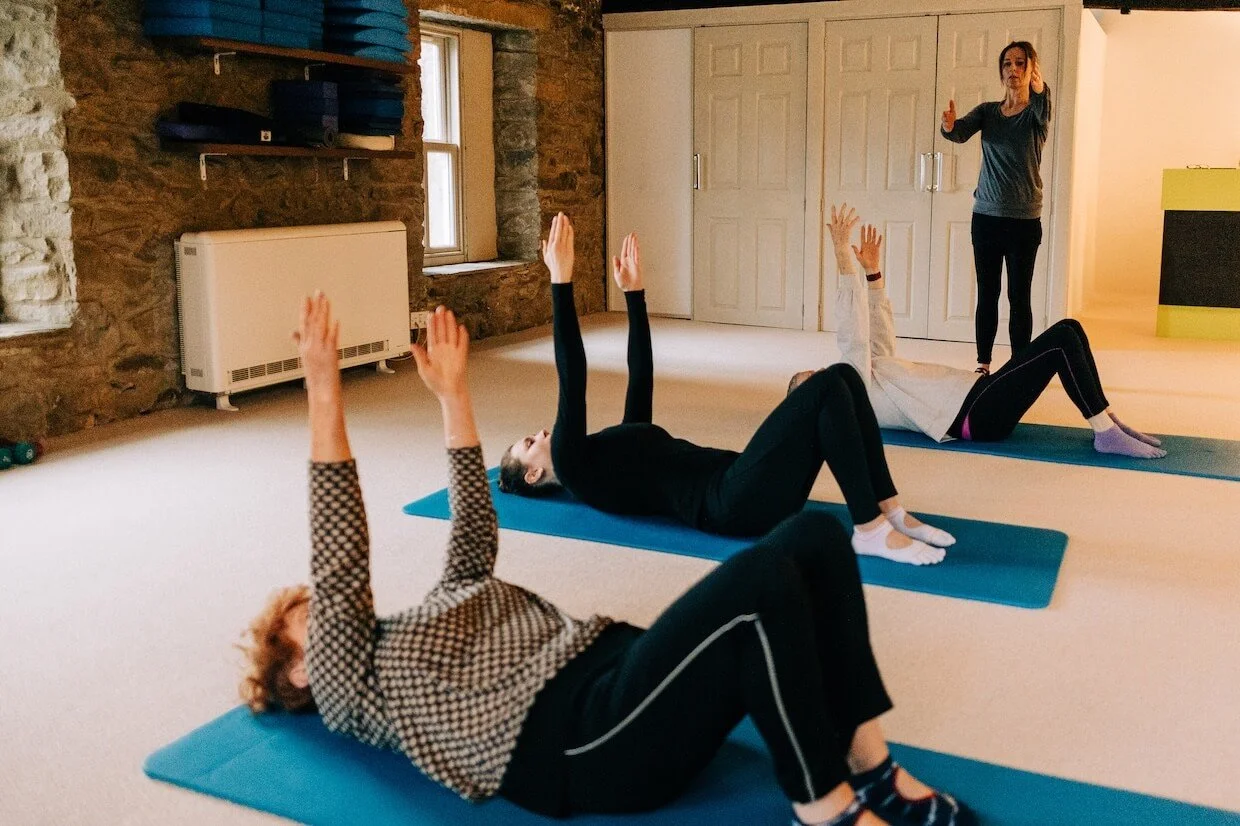
The classical Pilates repertoire opens up a little at intermediate level. You'll work with exercises like the 100 with greater control. We’ll look at adding rotation and spiralling movements to more of your classical exercise to add fascial stretches and start to add more complexity to your extension work – turning Star into Swimming for example. This next sentence needs to be in the advanced level class (The Teaser—that iconic Pilates exercise—becomes accessible as you develop the core strength and control it requires).
You'll explore more advanced spinal articulation, learning to move each vertebra with precision. This work is transformative for spinal health and mobility. The Side lying leg series becomes more complex, challenging your stability and hip strength in new ways as we progress it and add variations.
Balance and coordination work intensifies. You might find yourself on one leg, coordinating opposite arm and leg movements, or working in positions that challenge your equilibrium. This work builds the kind of balance that prevents falls and keeps you confident in your movement.
Breathing patterns become more sophisticated, coordinating with complex movements. You'll learn to maintain steady breath even when challenged, a skill that reduces stress response and improves performance in all activities.
The beautiful thing about intermediate work is that there's always another layer to discover. An exercise you've mastered has variations that bring new challenges. This is why longtime practitioners never get bored—there's always something to refine, deepen, or discover.
Intermediate vs. Other Pilates Levels
Understanding where intermediate fits in your Pilates journey helps you progress thoughtfully and maintain a balanced practice.
Progression from Beginners: While Beginners Pilates focuses on learning the eight principles and fundamental positions, intermediate assumes you've internalised these foundations. Beginners might perform five repetitions with rest between; intermediate students perform ten with flowing transitions. The exercises themselves progress, but so does the expectation of precision and control.
Relationship to Improvers: Improvers Pilates sits between beginners and intermediate, offering a bridge for those who've mastered basics but aren't quite ready for full intermediate challenges. Many students attend both improvers and intermediate classes, using improvers to refine technique and intermediate to push their edges. There's no rule saying you must choose only one level.
When to consider specialised classes: As your practice deepens, you might be drawn to specialized work. HIP Pilates is for Intermediate level or advanced practitioners who want to add cardiovascular work within Pilates and challenge their coordination, classic mat work and build bone strength and muscle tone complementing your intermediate work beautifully. Reformer Pilates and studio semi-private sessions offers equipment-based challenges that work your body in different ways. Many intermediate students mix mat and apparatus work, finding that each enhances the other.
The value of mixing class levels can't be overstated. Returning to an improvers or even beginners class occasionally allows you to refine basics with fresh eyes. Some days your body needs a gentler challenge. There's no shame in attending a "lower" level class—in fact, it demonstrates wisdom about meeting yourself where you are on any given day.
Common Challenges and How to Overcome Them
Every intermediate student encounters challenges. Knowing they're normal and have solutions helps you navigate them with grace.
Frustration with progression pace: You might feel like you're progressing more slowly than you did as a beginner. This is normal! The refinements at intermediate level are subtler but no less important. Celebrate small victories—holding a position two seconds longer, maintaining alignment through a full set, finally achieving that coordination that's been elusive.
Injury: We all get injured at times or suffer areas of pain or discomfort. Just tell your teacher and exercises will be modified for you to ensure that you won’t make matters worse and quite often people feel that coming to class and doing some gentle movement under supervision on different planes helps with their injury or pain.
Comparison with others: In any intermediate class, you'll see a range of abilities. Someone who's been at this level for years will look different than someone newly arrived. Remember that Pilates is not a competitive sport. Your practice is yours alone. Focus on your own progress, not others' achievements.
Physical plateaus: There will be times when you feel stuck, unable to progress in a particular exercise. This is your body consolidating previous learning. Keep showing up, keep focusing on quality, and trust the process. Often, a breakthrough comes just when you've stopped forcing it.
Maintaining consistency: Life gets busy. Missing classes becomes easier. But consistency is what creates lasting change. Treat your Pilates practice as essential self-care, not optional. Even one class per week maintains your practice; two or more per week creates real transformation.
Knowing when to modify: Even at intermediate level, some days you'll need to modify exercises. This might be due to fatigue, minor discomfort, or simply what your body needs that day. Modification is not failure—it's intelligent practice. Listen to your body and work within your current capacity, not where you wish you were.
Ready to Deepen Your Practice?
Intermediate Pilates represents an exciting chapter in your Pilates journey. It's where challenge meets capability, where effort creates transformation, and where you discover what your body can really do when you combine proper technique with consistent practice.
Whether you've been practicing at beginner or improver level for months or years, there comes a time when your body is ready for more. That readiness might feel like curiosity, restlessness, or simply a sense that you're capable of deeper challenges. Trust that feeling.
Our intermediate classes are designed for students who've built strong foundations and are ready to explore more complex work. You'll be challenged, supported, and guided to progress safely and sustainably. The community of intermediate practitioners is welcoming and encouraging—we're all working on our own movement journey together.
Find Your Next Challenge
Explore our full class schedule to find intermediate sessions that fit your timetable. If you're currently in beginners or improvers classes, speak with your instructor about your readiness to progress. If you've practiced Pilates elsewhere and are new to our studio, get in touch to discuss your experience—we'll help you find the right level.
Ready to take your practice deeper? Book your first intermediate class and discover what happens when you challenge yourself with expert guidance and supportive community. Your body is capable of more than you imagine.
Looking to build on your intermediate practice? Discover our specialised offerings including HIP Pilates for targeted hip work, Reformer Pilates for apparatus challenges, or Equine Pilates if you're a rider wanting to improve your performance in the saddle.