What is Beginner Pilates? Is It Right For Me?
Beginners Pilates introduces you to fundamental movements, breathing techniques, and postural awareness in a supportive, welcoming environment.
Perfect for anyone new to Pilates or returning after a break, these classes build a strong foundation for lifelong movement health. You'll learn the eight principles that make Pilates unique, discover how to engage your core properly, and develop body awareness that transforms how you move in daily life.
Finding Your Perfect Starting Point
Rachel doesn't offer rigid "beginner" or "intermediate" classes. Instead, she creates bespoke sessions where exercises are tailored to each person's ability within the same class. Whether you're completely new to Pilates or have some experience, you'll work at the right level for your body.
Your first step: Book a one-to-one assessment with Rachel. She'll evaluate your movement, discuss your goals, and recommend the specific classes that will serve you best.
Walking into your first Pilates class can feel daunting. Perhaps you've heard friends rave about how Pilates changed their back pain or improved their posture, and you're curious but unsure where to start. Maybe you've tried other forms of exercise and felt lost or intimidated. Or perhaps you simply want to move better, feel stronger, and build a practice that supports your body for years to come.
Beginners Pilates exists specifically for you. It's designed for people who've never done Pilates before, who feel uncertain about their fitness, or who need time to build confidence with movement. There's no expectation that you arrive already knowing what to do or already being "good at it." The whole point is to learn, explore, and build foundations at a pace that works for your body.
Let's explore what Beginners Pilates really involves and why it might be exactly what you're looking for.
What is Beginners Pilates?
Beginners Pilates teaches the fundamental principles and movements that form the foundation of your entire Pilates practice. Rather than rushing into complex exercises or assuming prior knowledge, these classes take time to build proper technique, body awareness, and understanding. Think of it as learning a new language—you start with the alphabet before attempting to write poetry.
The practice is based on eight core principles that distinguish Pilates from other forms of exercise: concentration, relaxation, alignment, breathing, centering, coordination, flowing movements, and stamina. These principles aren't abstract concepts—they're practical elements you'll apply to every movement. You'll learn lateral thoracic breathing that supports your spine, and integrates functional breathing which is vital to a healthy pelvic floor, healthy nervous system and whole body health.
At beginner level, you'll work primarily on mat-based exercises, though some classes incorporate small equipment like resistance bands, Pilates balls, or foam rollers. The exercises themselves are simpler versions of the classical Pilates repertoire—movements that challenge you appropriately while building the neuromuscular patterns you need for more advanced work later. Everything is taught step by step with clear demonstrations, modifications, and individual attention.
What makes Beginners Pilates special is that it meets you exactly where you are. Your instructor doesn't expect you to know anything. Your classmates are learning too, many of them just weeks ahead of you. The environment is designed to be judgment-free and supportive, with emphasis on your own progress rather than comparison with others. This is your practice, developing at your own pace.
The approach follows the Body Control Pilates method, which emphasises evidence-based teaching, safety, and individual adaptation. This means every exercise can be modified for different bodies, abilities, and concerns. If you have back pain, limited flexibility, or simply feel uncertain, there's always a way to work safely and effectively.
Who is Beginners Pilates For?
The beautiful thing about Beginners Pilates is its accessibility. It's genuinely suitable for almost anyone, regardless of age, fitness level, or physical condition. Here's who typically benefits:
Complete newcomers to Pilates who want to learn properly from the start. Starting with beginners classes gives you the foundation that makes everything else easier. You'll understand why you're doing each movement, not just copying shapes without comprehension.
People returning to exercise after a break who need to rebuild confidence and strength gradually. Perhaps you've been inactive for years, recovered from illness, or simply let fitness slip while life got busy. Beginners classes provide a gentle re-entry to movement without overwhelming you.
Those with specific concerns like back pain, poor posture, or stress. Pilates is often recommended by physiotherapists and GPs for various conditions because the low-impact, controlled nature makes it safe while still being effective. Many people discover Pilates because they're seeking relief from chronic discomfort, not because they want to become athletes.
Anyone wanting to understand proper form and technique before progressing. Even if you're relatively fit from other activities, Pilates has unique movement patterns and principles worth learning thoroughly. A runner or weightlifter might have excellent cardiovascular fitness or strength but still benefit from beginning at beginner level to learn Pilates-specific techniques.
People building confidence with movement who've felt intimidated by other fitness environments. If you've tried gym classes and felt lost, or attempted home workouts and given up, Beginners Pilates offers structured guidance with personal attention in a genuinely welcoming space.
The age range in beginners classes typically spans from twenties to eighties. You'll see people of all body types, fitness levels, and life stages. Some have never exercised regularly before. Others are former athletes adapting to changing bodies. What unites everyone is the willingness to start from the beginning and learn something new.
What to Expect in Your First Beginners Class
Understanding what will happen in your first class can ease those pre-class nerves. Here's the typical structure of a beginners Pilates session:
You'll arrive a few minutes early to settle in and introduce yourself. Your instructor will welcome you personally, ask about any injuries or concerns, and show you where to set up or ask you to choose a mat. Meeting the other class members often reveals that many of them were complete beginners quite recently—there's a shared understanding of what it feels like to be new.
The class typically runs for about an hour, beginning with a brief introduction where your instructor explains what you'll cover that day. This might include a reminder of key principles or answering questions from the previous week. There's no expectation that you remember everything from one session to the next—learning is cumulative and repetitive.
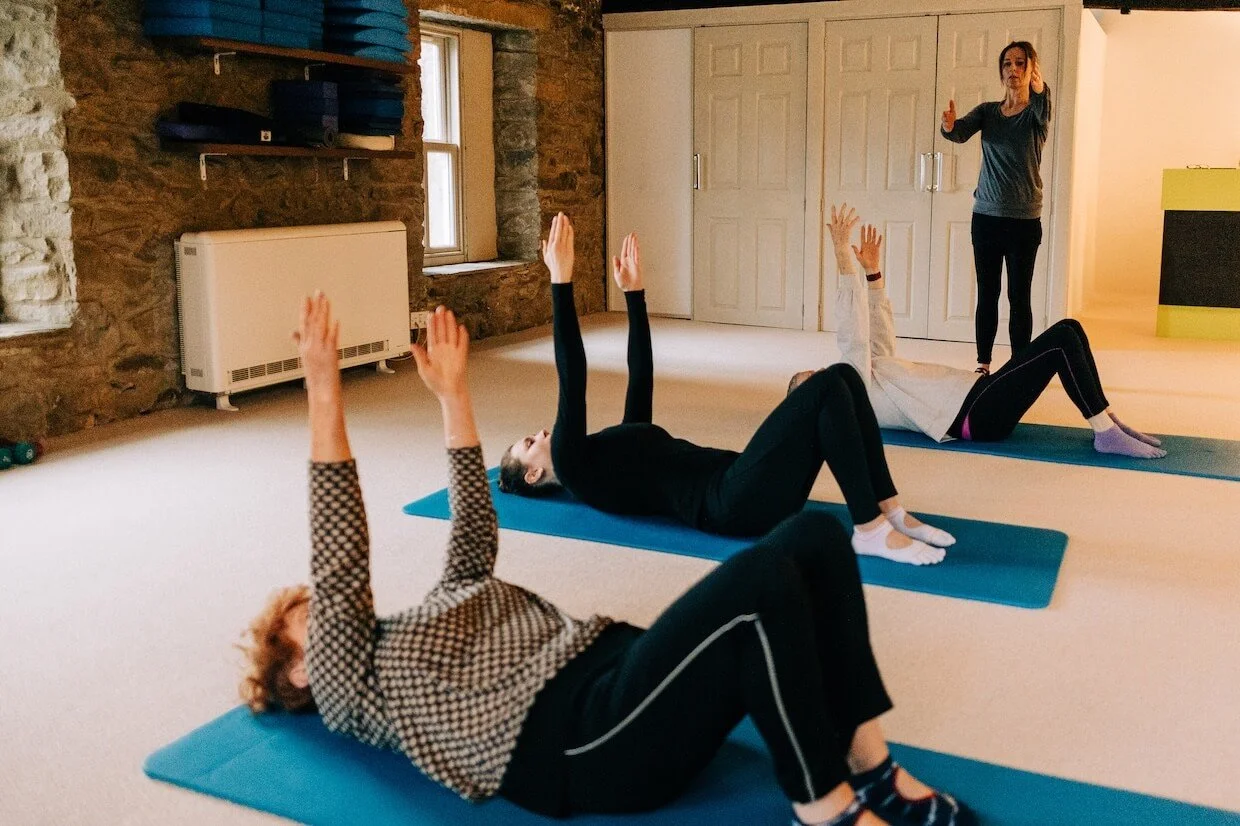
The warm-up involves gentle mobilisation of your spine and joints, breathing exercises, and simple movements that wake up your core. This isn't vigorous cardio; it's mindful preparation that brings your attention into your body. You might lie on your back practicing breathing patterns, roll your spine slowly through small movements, or do gentle arm and leg exercises that introduce the coordination to come.
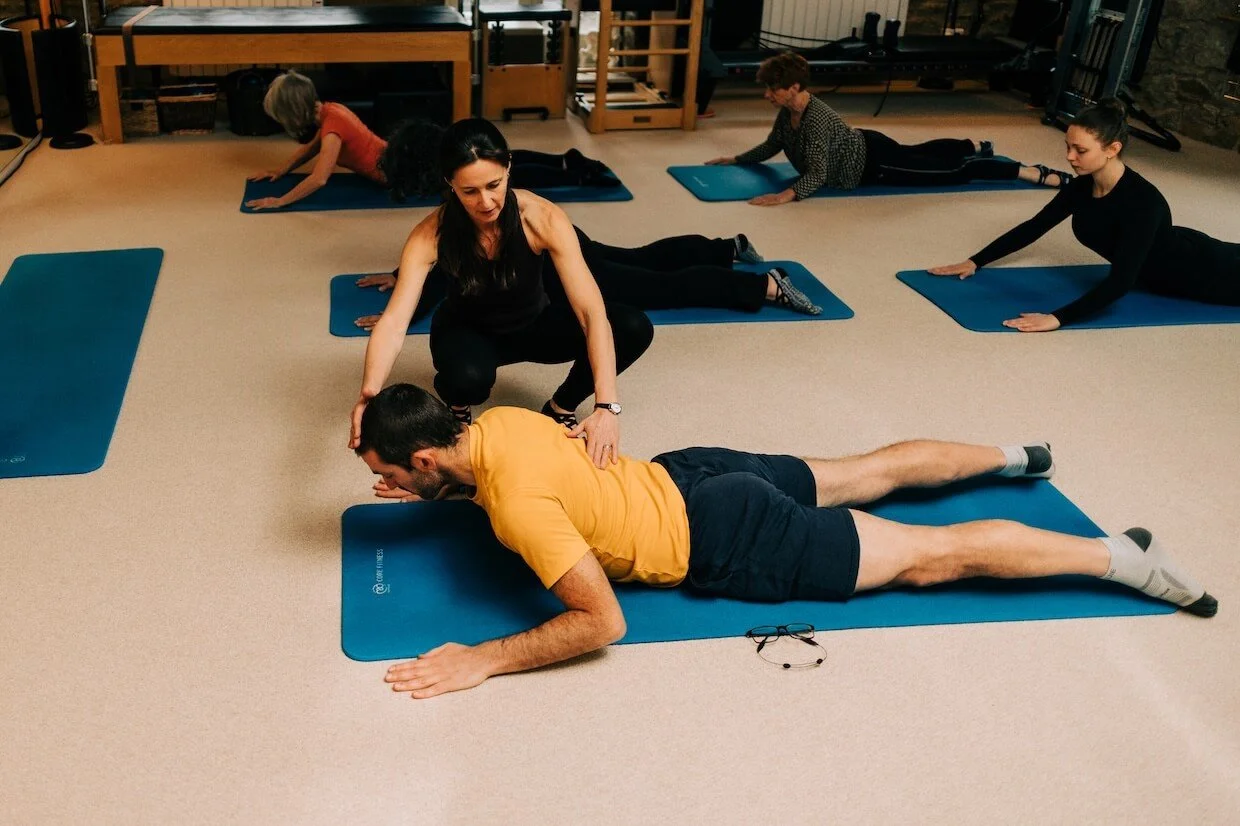
The main session forms the bulk of class time, working through fundamental Pilates exercises taught step by step. Your instructor demonstrates each movement, explains what the exercise is mobilising, what she wants you to stabilise and the purpose of the exercise, then guides you through attempting it yourself. She'll watch your form, offer corrections (sometimes with gentle hands-on adjustments that help you feel what muscles should engage), and provide modifications if something feels uncomfortable. The pace is deliberate, with time to understand what you're doing rather than rushing through a workout.
You'll practice movements like pelvic tilts, spine curls, single knee folds, cobra prep and side-lying leg work—names that might mean nothing now but will become familiar friends. Each exercise builds on the previous one, creating patterns your nervous system begins to recognise. Sometimes you'll repeat the same exercise several times to help your body learn; sometimes you'll try variations to understand how small changes affect the challenge.
The cool-down involves gentle stretching, relaxation techniques, and time to absorb what you've learned. This might include releasing hip flexors, stretching the spine, or simply lying still with focus on breath. We quite often end our classes in a standing position with some gentle roll downs and balance work .It's an important transition back to the rest of your day, leaving you feeling both worked and restored.
After class, there's always time for questions. Your instructor can provide feedback on your session, help you with any booking queries, or discuss anything that felt unclear. Many beginners worry about whether they're "doing it right"—rest assured, your instructor sees your efforts and will guide you toward improvement without making you feel inadequate.
Wondering if Beginners Pilates is right for you?
Explore our class schedule to see what sessions are available, or read about Body Control Pilates to understand the safe, evidence-based teaching method behind all our classes.
The Benefits of Starting with Beginners Pilates
While all levels of Pilates offer benefits, starting properly at beginner level creates advantages that rushing into harder classes simply cannot provide. Here's what you can expect to gain:
Physical benefits develop gradually but noticeably. Core strength improves not through aggressive crunches but through learning to engage deep stabilising muscles you've probably never consciously used before. This creates genuine support for your spine that reduces back pain and improves posture throughout daily life. Flexibility increases as you move through full ranges of motion with control—not passive stretching but active lengthening that builds strength while improving mobility.
Your posture changes almost without you noticing. Pilates teaches you what neutral alignment feels like, waking up proprioceptive awareness so your body begins to self-correct throughout the day. You might find yourself standing taller at the bus stop or sitting better at your desk without conscious effort. This improved alignment reduces joint strain and often alleviates chronic discomfort in necks, shoulders, and lower backs.
Mental benefits might surprise you more than physical changes. The concentration required creates a form of moving meditation that quiets mental chatter. For an hour, you're not thinking about work stress, family concerns, or your endless to-do list—you're focused on breath, movement, and sensation. Many people discover that Pilates class becomes their weekly mental reset, leaving them calmer and more centered.
Body awareness develops in ways that extend beyond the studio. You begin to notice how you move through daily activities—how you lift shopping, reach for items, or carry children. This awareness often leads to moving more efficiently and safely, preventing injuries before they occur. You develop a relationship with your body based on capability and care rather than criticism or appearance.
Functional benefits for daily life might be the most valuable of all. The strength you build isn't just for looking good or impressing others; it's for living better. Gardening becomes easier. Playing with grandchildren doesn't leave you stiff. Carrying luggage feels manageable. Getting down to and up from the floor happens without drama. These small improvements in functional capacity create significant quality of life enhancements, especially as you age.
The safe progression also provides injury prevention through proper technique. Learning foundational movements correctly means you won't develop compensatory patterns that could cause problems later. The attention to alignment and control protects your joints while building strength, creating a sustainable practice you can maintain for decades.
If you're curious about how Beginners Pilates can progress into more specialised work, our bone health classes focus specifically on bone health, balance and mobility, while Pilates for Life offers age-appropriate movement for maintaining independence as you get older.
Key Principles You'll Learn
The eight principles of Pilates form the foundation of everything you do, and beginners classes focus on making these concepts practical and accessible rather than abstract ideas.
Breathing is where most people start, learning lateral thoracic breathing that expands your ribcage sideways, breathing 360 degrees into the ribcage rather than puffing your belly forward. This breathing pattern supports your spine, facilitates core engagement, and helps you maintain control through movement.
Concentration transforms Pilates from mindless exercise into mindful movement. You're asked to focus completely on what you're doing—where your spine is positioned, how your core feels, which muscles are working. This concentration is what creates the mind-body connection that makes Pilates so effective for stress reduction.
Centring refers to working from your core—your powerhouse. You'll learn what engaging your core actually means (it's not sucking your stomach in or holding your breath!). This centred stability supports all movement and protects your spine.
Control emphasises quality over quantity. Five controlled repetitions with proper form matter far more than twenty sloppy ones. Beginners learn to slow down, feel the movement, and resist gravity rather than flopping through exercises.
Precision means every position and transition matters. The exact placement of your arms, the angle of your neck, the position of your pelvis—these details aren't fussy perfectionism but biomechanical principles that make exercises effective and safe.
Flowing movement develops as you progress, learning to transition smoothly between exercises rather than stopping and starting. At beginner level, you'll experience this in small ways—learning to coordinate breath with movement or flow from one position to another.
Relaxation might seem contradictory in an exercise class, but it's about releasing unnecessary tension. You learn to work hard without gripping your jaw, hunching your shoulders, or holding your breath. This efficient use of energy makes movement sustainable.
Stamina builds gradually through consistent practice. Beginners classes develop muscular endurance without exhausting you, creating a foundation for the longer, more challenging sequences you'll encounter at Intermediate and Improvers levels.
Beginners vs. Other Pilates Levels
Understanding how Beginners Pilates relates to other levels helps you appreciate its value rather than rushing to progress too quickly.
Beginners focus on learning while more advanced levels focus on refining and challenging. In beginners classes, your instructor expects you to need extensive explanation, demonstration, and correction. The pace is slower, with more repetition of the same exercises week to week. This isn't boring—it's how motor learning happens. Your nervous system needs time to create new movement patterns.
Improvers classes (read about Improvers here) bridge the gap between Beginners and Intermediate, offering a stepping stone for those who've mastered basics but aren't ready for full complexity. Many people spend 8-12 weeks in Beginners before moving to Improvers, though this varies widely based on frequency of attendance, prior movement experience, and individual learning pace.
Intermediate classes (learn about Intermediate Pilates) assume you've internalised the eight principles and can maintain proper alignment without constant cueing. The exercises are more complex, the pace faster, and the expectations higher. Attempting Intermediate without proper foundations often leads to frustration and poor movement patterns.
The value of staying at Beginners level until you're truly ready cannot be overstated. Building solid foundations makes everything else easier and safer. Rushing to a harder class might feel like progress, but it often means missing crucial elements that limit your advancement later. There's no medal for progressing fastest—only the satisfaction of moving well.
When you're ready to progress, your instructor will let you know. This might be after two months or six months; both are normal. The transition to the next level is collaborative, discussed openly, and based on your demonstrated competence rather than calendar time. Very often, when a new Beginners class starts, the whole class will progress together to become an Improvers level class.
Common Concerns (And Why They're Not Problems)
Most people arrive at their first Pilates class with concerns. Here are the most common ones and why they needn't stop you:
"I'm not flexible" is perhaps the most frequent worry. Good news: you don't need existing flexibility to start Pilates. In fact, Pilates is brilliant for developing flexibility precisely because you lack it. Every exercise can be modified for tight muscles, and you'll work within your current range of motion while gradually expanding it. No one expects you to fold yourself into pretzel shapes.
"I'm not fit" is exactly why beginners classes exist. Pilates builds fitness from wherever you are now. It's low-impact, adaptable, and progressive. You won't be gasping for breath or collapsing in exhaustion. You'll work hard, yes, but appropriately for your current capacity.
"I'm too old" is rarely true. Pilates suits all ages—many people start in their sixties, seventies, or even eighties. If you're concerned about age-related limitations, Pilates for Life or Bone Health offers specialised classes for older adults focused on maintaining independence and preventing falls.
"I'm carrying extra weight" worries some people, but Pilates is genuinely weight-friendly. Many exercises are lying down or seated, removing pressure from joints. Your instructor adapts exercises for your body without drawing attention to it. You're welcome exactly as you are.
"I have back pain" is often why people discover Pilates in the first place. It's frequently recommended by healthcare providers for back problems because the controlled, low-impact nature makes it safe while building the core strength that alleviates pain. Always get medical clearance if you have a diagnosed condition, but Pilates and back pain often pair beautifully. Rachel is also a fully qualified Back4Good Practitioner specialising on chronic Low Back Pain.
"I'm uncoordinated" is a concern many people share, but coordination is a skill you develop, not an inherent trait you either have or don't. Pilates improves coordination through practice. Start simple, progress gradually, and trust the process.
"I won't remember the exercises" between classes—you're not expected to! Your instructor guides you through every movement in every session. Familiarity develops naturally over time through repetition. Your teacher will also give you little snippets of homework to practice should you wish to in between classes as you get more familiar with the exercises
"Everyone else will be better than me". Remember: everyone in your class is learning too. Those who seem more competent were where you are just weeks ago. The environment is supportive, not competitive. You are the expert of your own body and it’s needs, don’t worry what anyone else is doing.
What You Need to Start
The practical requirements for Beginners Pilates are minimal, which is part of its accessibility.
Wear comfortable, form-fitting clothing. Leggings or fitted tracksuit bottoms with a fitted top work perfectly. The instructor needs to see your alignment, so baggy clothes make that difficult. You don't need special Pilates wear; whatever you'd wear for yoga or gentle exercise works fine.
For hygiene reasons, we ask that you wear socks. Some people prefer grip socks (with rubber dots on the bottom) or toesox with rubber grips on the bottom, but regular socks are equally acceptable. You won't need trainers. If using your own mat in Barnoldswick, bare feet are also fine.
Bring water to stay hydrated, though you probably won't need much during class. Pilates isn't sweaty cardio.
All equipment is provided in Skipton. Mats, balls, bands, blocks, rollers, and anything else needed. You just need to show up. In Barnoldswick, you need to provide your own mat, many also have their own equipment although it will be provided if you don’t have it.
Beyond the physical items, bring openness to learning, patience with yourself, and willingness to ask questions. You don't need existing knowledge, perfect form, or athletic ability. You just need to be willing to start where you are.
Ready to Start Your Pilates Journey?
Beginners Pilates offers a safe, supportive entry point into a practice that can transform how you feel in your body. Whether you're seeking relief from back pain, wanting to improve posture, building strength after injury, or simply curious about trying something new, starting properly at beginner level sets you up for success.
The foundations you build now will serve you for years, potentially decades. Learning to breathe properly, engage your core correctly, and move with control creates patterns that protect your body and enhance every physical activity you do. The hour you spend in class each week ripples out into improved movement throughout daily life.
Most importantly, you'll discover that Pilates is genuinely accessible. It's not just for dancers or athletes or naturally flexible people. It's for anyone willing to show up and learn, regardless of age, fitness level, or body type. The community you'll find in beginners classes is welcoming and supportive—everyone remembers being new.
Find Your First Class
Explore our class schedule to see beginner sessions that fit your timetable. If you have specific concerns or questions about whether Pilates is right for you, get in touch—we're always happy to discuss your individual situation and help you find the perfect starting point.
Ready to experience what Pilates can do for your body? Book your first Beginners class and discover why so many people wish they'd started sooner. Your body will thank you.
Once you've built strong foundations, explore progression through Improvers Pilates or Intermediate Pilates. For specialised work, discover Reformer Pilates for equipment-based training or Equine Pilates if you're a horse rider wanting better performance in the saddle.